A Conversation With Vic Michael, Owner/Manager, RF Towers
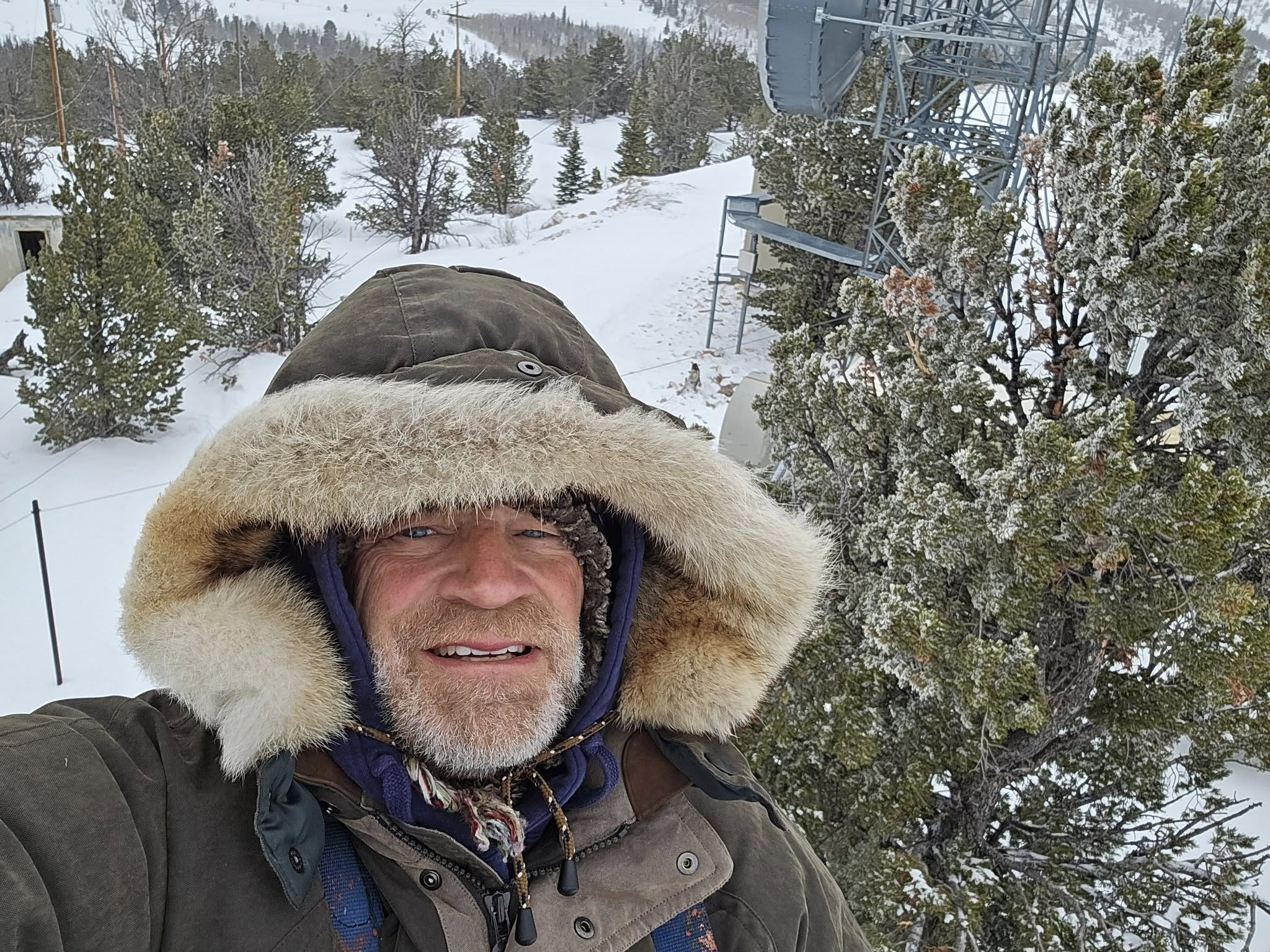
He calls himself the Bob Vila of towers: “I buy junk, fix it up and try to add tenants.” For Wyoming-based Vic Michael, that approach built a successful family business, a potpourri of 43 towers, a dozen FM translators and one radio station. A scrappy DIY-er, Michael specializes in towers in areas with rugged, difficult-to-access terrain, including Colorado, Wyoming, and Arizona. And he loves it.
How did you get into the business?
The day I was born, my father was digging the foundation for a tower for his first radio station. He had a love for radio and was one of the first guys in the 1960s to bounce a UHF signal off the moon. He had a 25-foot fully steerable dish in our backyard. I was inspired by all this and by age 18, I was the tower crew for his business. I built a station in Benton, PA when I was 25. Eventually my brother and I purchased stations in Wyoming, including some 100kW FMs that came with towers and tenants. Then the Telecom Act of ’96 came along and cellular was starting. We sold our stations in Cheyenne and Casper to Clear Channel (now iHeartMedia) and I started buying towers, including one on Lookout Mountain in Denver from American Tower that remains one of my highest revenue sites. I gobbled up towers – fixer-uppers, some with land, some with no tenants – and put together this ragtag operation we have today.
Describe your business focus and its challenges.
As a company, I like tall mountain sites. If someone needs to build a data network along the Colorado Front Range, they don’t want microwave sites every two miles, they want to go 20-30 miles. It’s the same with broadcast; they want to be up high. Most of our business is high mountain sites. That can be challenging, especially in the wintertime. We’ve found Argos [an extreme terrain vehicle that, when equipped with a full track system, can “float” over deep snow] to be the most versatile for getting to some of these sites in the winter. Sometimes we rent helicopters because it’s the only way to get there. Over the years we’ve developed our own ways of dealing with the challenges. Then there’s the travel time – sometimes you’re going up some rickety forest service road and it’s slow going. But we have four-wheel drive equipment and a 100-foot, all-terrain crane for hanging microwave and other things. It’s refreshing. You’re not working on a 100-foot monopole in the middle of the city. You’re on top of some crazy 12,000-foot mountain; you get to see the scenery from the top of the world.
What’s the hairiest situation you ever found yourself in as a tower operator?
We were building a new guyed tower about 20 years ago on Bear Mountain, outside Custer, SD. My sons work with me, and we were doing it right. We put up the first set of guys and then we stacked up the next 40 feet. As a guyed tower, the only thing keeping it in the air is the guy lines and the crew on the ground was getting ready for the next set of wires. We had it up 80 feet, and I’m on the top of this tower myself, waiting for these guys to start pulling wires up. But something happened. The one guy wire that they had came loose. And I hear this snap – you feel it too – and the tower starts coming over. I’m up 80 feet and your life starts flashing before your eyes. Luckily, there were three of them down there working on the anchor. When this thing lets go, their adrenaline starts pumping but they instantly react to it. Somehow, one of them got a hold of it and was able to anchor it before it got away from them. It scared the ever-loving crap out of me! After the hundreds of towers we’ve built over the years, that’s the closest I’ve ever come… and it turned out okay.
How important is opening new spectrum and what impact do you expect it to have?
The FCC doesn’t have enough spectrum to go around, especially with all the broadband development. A lack of spectrum is part of what’s driving fiber, but that’s a heavy investment. If you can put in a 20 gigahertz point-to-point microwave digital system, that’s a lot cheaper than building miles of fiber. I don’t have a crystal ball, but I know this much: As long as people don’t want to be connected to a wire, there’s always going to be a need for land-based transmission sites.
By Paul Heine, Inside Towers Contributing Analyst
Paul Heine has covered radio/audio, media and marketing since 1985. He has held senior editorial management positions at Inside Radio, Radio & Records, Billboard Radio Monitor and the Friday Morning Quarterback (FMQB). Heine has also reported and analyzed media news and trends for Adweek, Mediaweek, Billboard and The Hollywood Reporter; appeared on “Today” and Fox News; and has been quoted in the New York Times, Entertainment Weekly, the Los Angeles Times, USA Today and other publications. He began his career in on-air and programming positions at radio stations in Buffalo and Rochester, NY.