

 In an industry defined by constant technological change, few companies can point to nearly five decades of continuous operation. For Kenwood Telecom, reaching its 46th year in business represents more than longevity; it reflects a family-founded company that has evolved alongside the telecommunications industry itself.
Today, Kenwood Telecom is known for manufacturing the steel infrastructure that supports wireless networks, including sector frames, platforms, mounts, and structural components found on tower sites across the country. But long before the rise of cellular networks, the company’s foundation was being laid by the father of Paul Novis, President of Kenwood Telecom, who identified a challenge facing the nation’s telephone networks and set out to solve it.
According to Novis, the business was built around an invention designed on a bar napkin. The design helped central offices manage the industry’s transition from analog to digital switching technology. As telecommunications providers modernized their networks, demand for the product helped establish what would eventually become Kenwood Telecom.
“He mortgaged his house a couple of times, quit his job, and started in his backyard,” Novis said. The company initially focused on products and services supporting wireline telecommunications infrastructure.

From left to right: Peter Novis, Joey Novis, Theresa Brown, Matt Novis, and Paul Novis
As the telecommunications industry underwent deregulation in the 1980s, new opportunities emerged for independent suppliers, creating an environment that accelerated the company’s growth.
Novis said the changing regulatory landscape opened doors that may not have existed only a few years earlier. As the business grew, family members joined the company, helping expand its sales, distribution, and service operations. The next major turning point arrived unexpectedly.
One of the company’s customers was Southern Bell. Through a personal connection on a youth baseball team, Novis’ father met an employee who had been transferred into a small startup division known as BellSouth Mobility, which was the first cellular company in the southeast.
Recognizing the opportunity, the company immersed itself in the emerging wireless market, applying its expertise in DC power, protection, and telecommunications infrastructure to support the construction of some of the earliest cellular networks in the region.
“We did everything we could to understand the networks that they were trying to build,” Novis said.
The Path From Distribution to Manufacturing
As wireless networks expanded throughout the 1980s and 1990s, Kenwood Telecom evolved alongside them. Initially operating as a distributor of telecommunications infrastructure products, the company recognized an opportunity to leverage its industry experience in a new way. After identifying gaps in the market and limited supplier options, Kenwood began investing in engineering and manufacturing capabilities of its own, a move that would help define its role in the wireless infrastructure sector for decades to come.
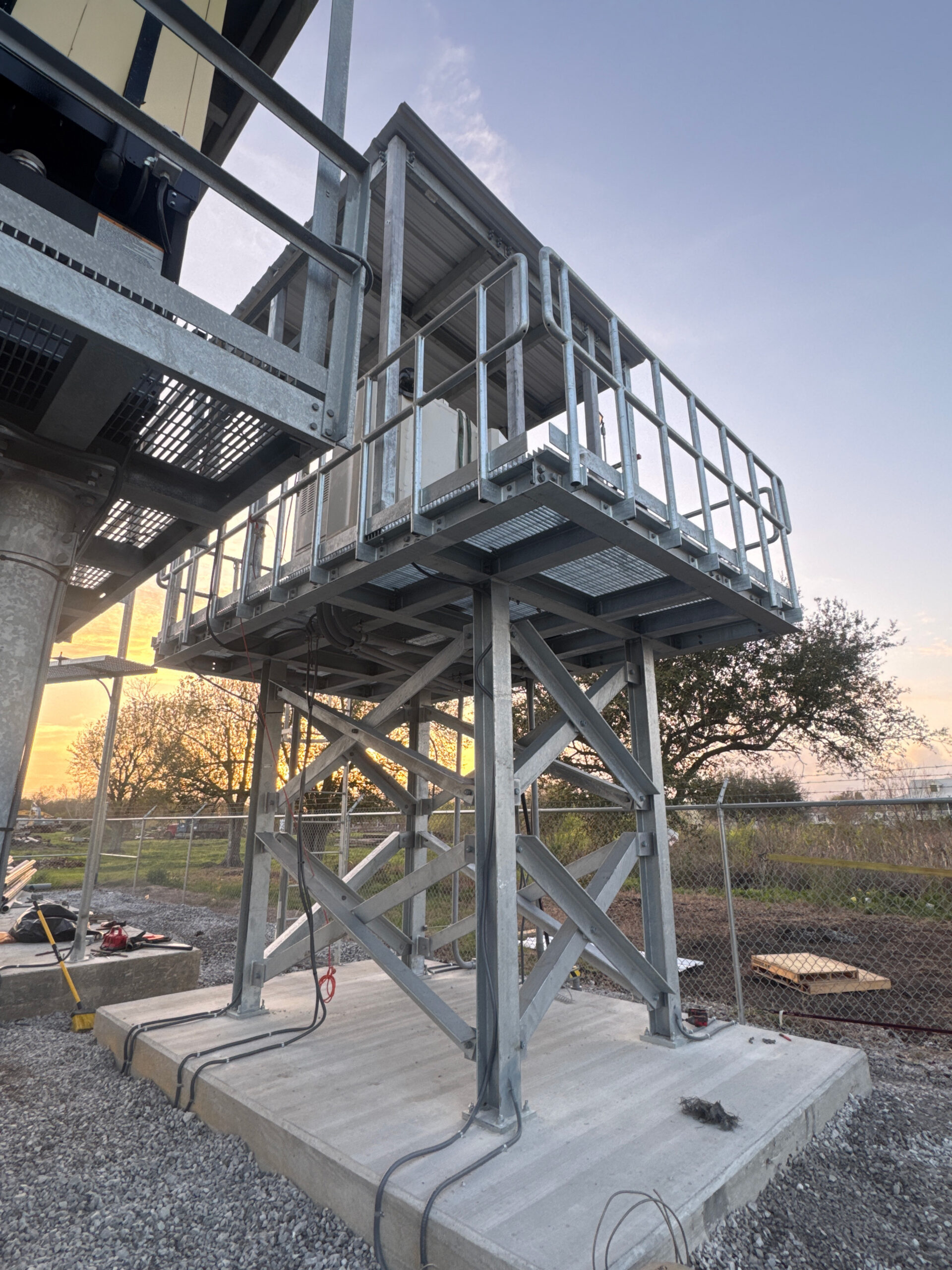
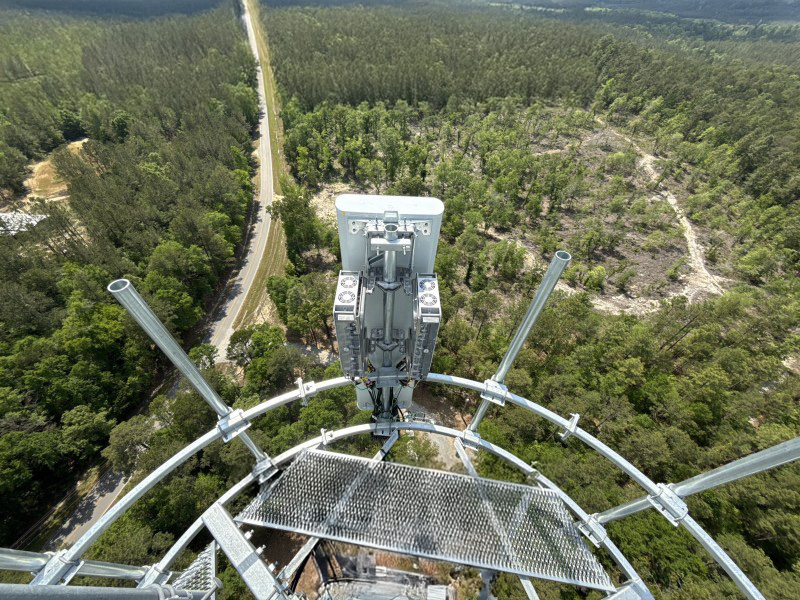 Over time, the company developed a broad portfolio of products supporting wireless deployments, including tower mounts, cable support accessories, ice bridges, rooftop and wall mounts, lattice tower and monopole components, RRU mounting kits, platforms, canopies, grounding hardware, and safety equipment. In addition to its standard product offerings, Kenwood provides custom engineering and fabrication solutions designed to meet the specific requirements of individual projects. The transition from distributor to manufacturer established the company’s long-term position within the wireless infrastructure market and allowed it to play a larger role in supporting network deployments nationwide.
To support future growth, Kenwood adopted a contract manufacturing model rather than relying on a single production facility. Novis said the decision was driven by the increasingly large scale of carrier deployments and the need to respond quickly to major orders.
“We recognized very early that the carriers could easily drop 300 sites on somebody from an order standpoint,” he said. “There’s no way we could keep up with what the biggest potential customers in the United States wanted if we had everything under one or even two roofs.”
Today, Kenwood works with manufacturing partners across the country while maintaining a strong commitment to domestic production. The approach provides the flexibility to scale output based on demand while supporting projects of varying sizes and complexity.
“Supporting domestic manufacturing has always been important to us, and we work hard to keep as much of our production in the United States as possible,” Novis said.
Experience Since the First 100 Cell Sites
 While the wireless industry has changed dramatically over the past four decades, Novis believes one of Kenwood’s greatest strengths remains its experience.
“We were around and in the industry when they put up the first 100 cell sites across the Eastern Seaboard,” he said. That perspective has given the company a front-row seat to multiple generations of wireless technology, from the earliest analog cellular systems to today’s nationwide 5G networks.
“The experience we bring to the table is a good comfort zone for our customers,” Novis said. “There’s not a lot they can talk about that we haven’t experienced.”
Novis said Kenwood’s hands-on approach to quality control remains central to the company’s operating philosophy. By maintaining oversight from design through shipment, the company works to ensure its products meet the demands of deployments in environments ranging from northern snow and ice conditions to coastal hurricane zones. “We control it from that point all the way until it goes on a truck,” Novis said. “We see it, we touch it, and we measure it, we test it, and assisted by our ISO:9001 2015 certified QMS, we want everything that goes out the door to exceed the quality expectations of our customers.”
Beyond product quality, Novis said customer service remains one of the company’s defining principles. He traced that philosophy back to lessons learned from his father, who believed that understanding a customer’s challenges and responding quickly to their needs was fundamental to long-term success.
That customer-first mindset continues to guide the company today, even as the wireless industry evolves through 5G, fixed wireless access, edge computing, and emerging technologies. While networks and infrastructure requirements continue to change, Novis believes the fundamentals of building lasting customer relationships remain constant. “Longevity is earned,” he said.

As Kenwood Telecom marks 46 years in business, Novis views the company’s longevity as the result of a simple but consistent approach: delivering quality products, maintaining strong customer relationships, and adapting alongside an industry that continues to evolve. Those same principles have guided the company from its family-business roots to its current role supporting wireless infrastructure deployments across the country.
To learn more about Kenwood Telecom’s wireless infrastructure solutions and 46-year history serving the telecommunications industry, visit Kenwood Telecom.